

Hospitality & Guest Experience
Strategic Unease: When a Little Strangeness Elevates a Space
Wednesday, September 2, 2026


.svg)
What if the goal isn't for guests to feel comfortable in a space, but to remember it? That's a different design question, and it leads to a different kind of art.
Most conversations about art in commercial spaces start and end with comfort. Soften the room, warm up the palette, make people feel at ease. That instinct isn't wrong, but it's incomplete. Comfort gets someone through a room. Attention is what makes them remember it, and attention doesn't only come from beauty. Sometimes it comes from a little friction.
There's real research behind this. Studies on how people respond to ambiguous artworks have found that ambiguity itself, not just general visual complexity, predicts how interesting and appealing a piece feels. Separate imaging research shows that when people look at ambiguous images, their eyes move more and their brains stay more actively engaged than they do with images that resolve cleanly. In plain terms, an image that doesn't fully explain itself keeps people looking longer, and that extra attention is measurable, not just anecdotal.
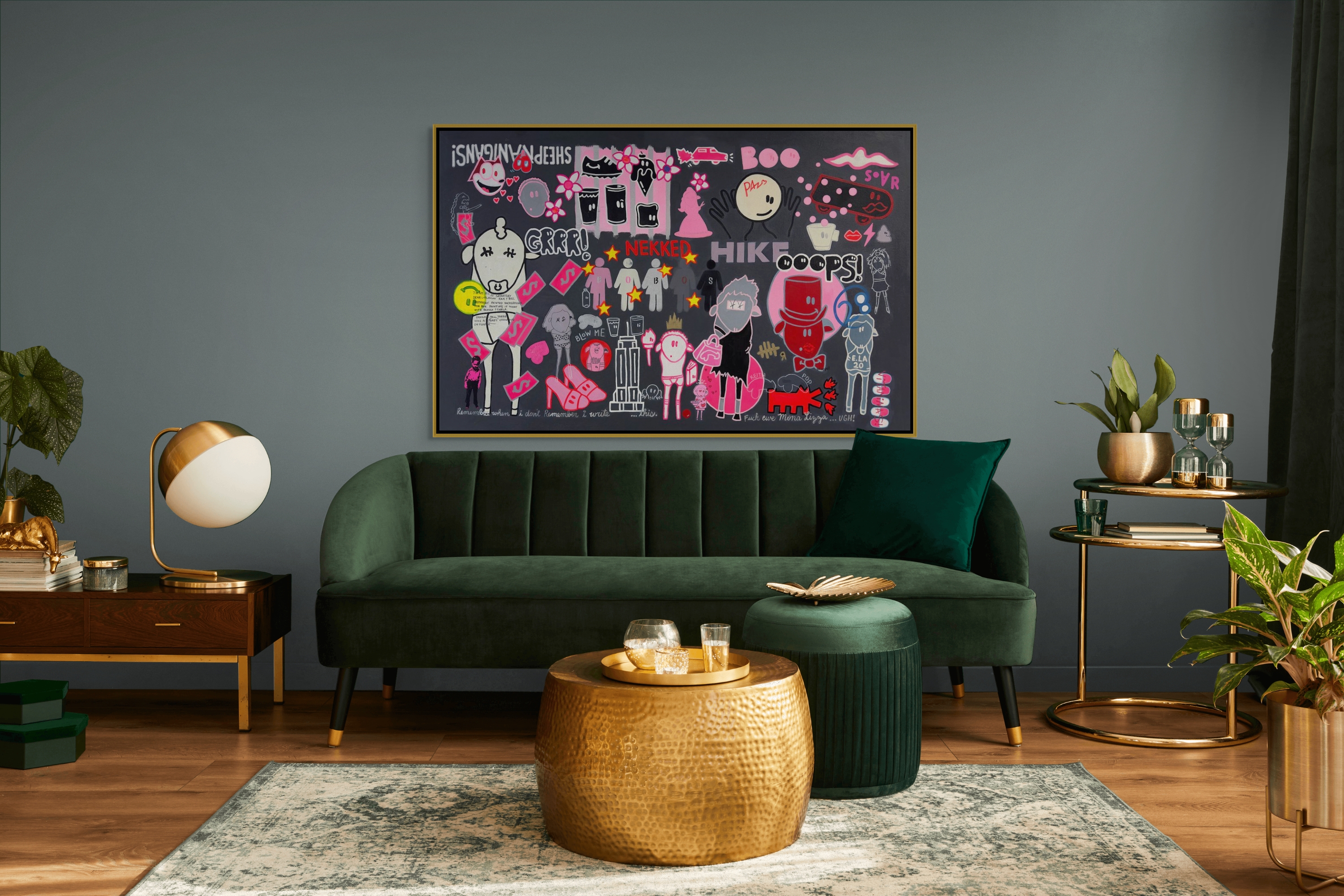
Strategic unease is what we call that friction when it's chosen on purpose. Not horror, not shock. Ambiguity: a figure that doesn't quite resolve, a composition that resists a single read, an image that seems different the second time you look at it. The goal is a held gaze, not discomfort, a piece that makes someone pause a beat longer than they planned to.
Where It Works
Hotel bars and late night dining rooms are built for lingering, not passing through. A moody, ambiguous figurative piece behind the bar is the kind of thing a guest photographs and asks the bartender about while waiting for a table.
Screening rooms and production offices are natural homes for a surreal or unresolved composition in the lobby, since entertainment industry spaces have long rewarded a cinematic or slightly off kilter sensibility.
Nightlife and lounges already prime people to notice detail through low light and a slower pace. A piece that rewards a second look fits the mood rather than fighting it.
Bold, brand forward corporate headquarters can use a piece that holds attention to reinforce brand personality far more than a safe, decorative choice would. Think a tech company that wants its lobby to feel like a statement, not a waiting area.
Where It Backfires
Unease is a spectrum, and it has a ceiling. Research on ambiguous art points to why: people appreciate uncertainty most when they can actively work to resolve it, piecing together a meaning even if the piece never fully explains itself. When there's nothing to work with, ambiguity stops being intriguing and starts being simply confusing or unpleasant. That distinction, solvable versus unresolved, is often the real line between a piece that works and one that doesn't.
It's also why some environments have no room for this at all, regardless of how well a piece is chosen.
Healthcare and wellness spaces. Patients and families need reassurance, not ambiguity. This is the clearest line: what reads as a held gaze in a hotel bar can read as distressing in a waiting room.
Family hospitality. Resorts, family restaurants, anywhere trust and ease are the primary job of the space. Strangeness competes with that goal instead of supporting it.
Client facing corporate environments built on trust. Financial services, healthcare adjacent businesses, anywhere the art needs to project stability above personality.
The line isn't about taste. It's about what the space is asking of the person standing in it, and whether the piece gives them enough to hold onto.
A Curation Decision, Not a Gamble
Our viewing room, The Uncanny Hour, is built around this same principle, works selected for ambiguity and tension, meant for the spaces that can hold them. Strategic unease isn't for every environment. But where it fits, it's a curatorial choice worth making deliberately, not one to leave to chance.

More Posts
Related Articles

Harnessing Color Psychology in Healthcare Art
Learn how strategic color choices can transform clinical spaces into havens of comfort and support.

Exploring the Benefits of Corporate Art Consulting
Using art to create a professional workplace and enhance office layout for a positive and inspiring environment.
The Intricate Allure of Texture in Abstract Art
The transformative power of texture in our online exhibition, featuring the abstract works of Father Bill Moore.
About Us
TKOart is a full-service art consultancy with over 30 years of experience, dedicated to bringing your fine art needs to life.