

Art In The Workplace
Plan Your 2027 Art Program Now: What Lead Times Mean for Your Budget
Wednesday, October 21, 2026


Picture the last week of November. Finance flags a budget line that hasn't been touched. Facilities remembers the fourth floor has been bare since the move. Someone says, "Let's get some art up before the new year," and the room goes quiet, because no one knows how long that actually takes.
The honest answer is longer than most people expect. Art has to be selected, approved, produced, framed, shipped, and installed around a working office, and every step runs on its own clock. The offices that get it right don't get lucky in December. They start while there's still time to decide well. With 2026 budgets closing and 2027 plans taking shape, that time is now.
The Clock Starts Before the Art Does
Most surprises in an art project come from the same place. The piece on your wall is the end of a long sequence, and every step in that sequence has its own timeline. Here's how a typical corporate program runs:
- Planning and budget alignment: 1 to 2 weeks
- Curation and concept: 2 to 4 weeks
- Review and approvals: 1 to 3 weeks
- Sourcing or selecting pieces: 1 to 4 weeks
- Printing and custom framing: 2 to 6 weeks
- Commissioned work, if any: 8 to 16 weeks or more
- Shipping and delivery: 1 to 3 weeks
- Installation: 1 to 3 days per floor, often after hours
Some of these stages overlap, so the total runs shorter than the ranges added together. A refresh using pieces that already exist can come together in about 4 to 8 weeks. Add new sourcing, printing, and framing, and 8 to 14 weeks is more realistic. Commissions are better planned in months, and a multi-floor program with custom work can run six months or more.
Count back from a mid-January install. A program with new printing and framing needed to start somewhere between early October and late November. Start in mid-December instead, and the install lands between early February and late March.
Q4 Is a Window, Not a Deadline
Every fourth quarter raises the same two questions in finance and facilities meetings: what do we do with the budget that's left, and what do we need to secure for next year? An art program can answer both, but only if it reaches the agenda while there's still room to act. A November decision leaves time for review, ordering, and scheduling. A mid-December decision often leaves time only for a plan.
Plenty can be set in motion before the year closes: a finalized selection and approved scope, orders placed for prints, framing, or a rental program, deposits paid to begin commissioned work, and installation dates reserved for early next year. Accounting treatment varies from one organization to the next, so check with your finance team on how purchases, deposits, and rentals are recorded.
The same logic applies to 2027. A dedicated art line in next year's budget, even a modest one, turns refreshes into planned events instead of requests that compete for funding mid-year.
What Actually Slows Things Down
Delays usually trace back to three things, and two of them have little to do with the art itself.
Approvals. Every added stakeholder adds days. A committee reviewing images by email can stretch a one-week sign-off into three. Name one decision-maker, or one person who gathers feedback and speaks for the group, and the schedule tightens without losing anyone's input.
Custom work. A commissioned piece, a large-format print, or a custom frame is made to order, which means it can't be rushed without compromising quality. The fastest route to a good result is deciding early which pieces need that treatment and which can come from existing work.
Access. Installing in an occupied office means working around meetings, moves, and whatever else facilities has scheduled. Book the install window early, even before the art is finished.
Build a Calendar, Not Just a Project
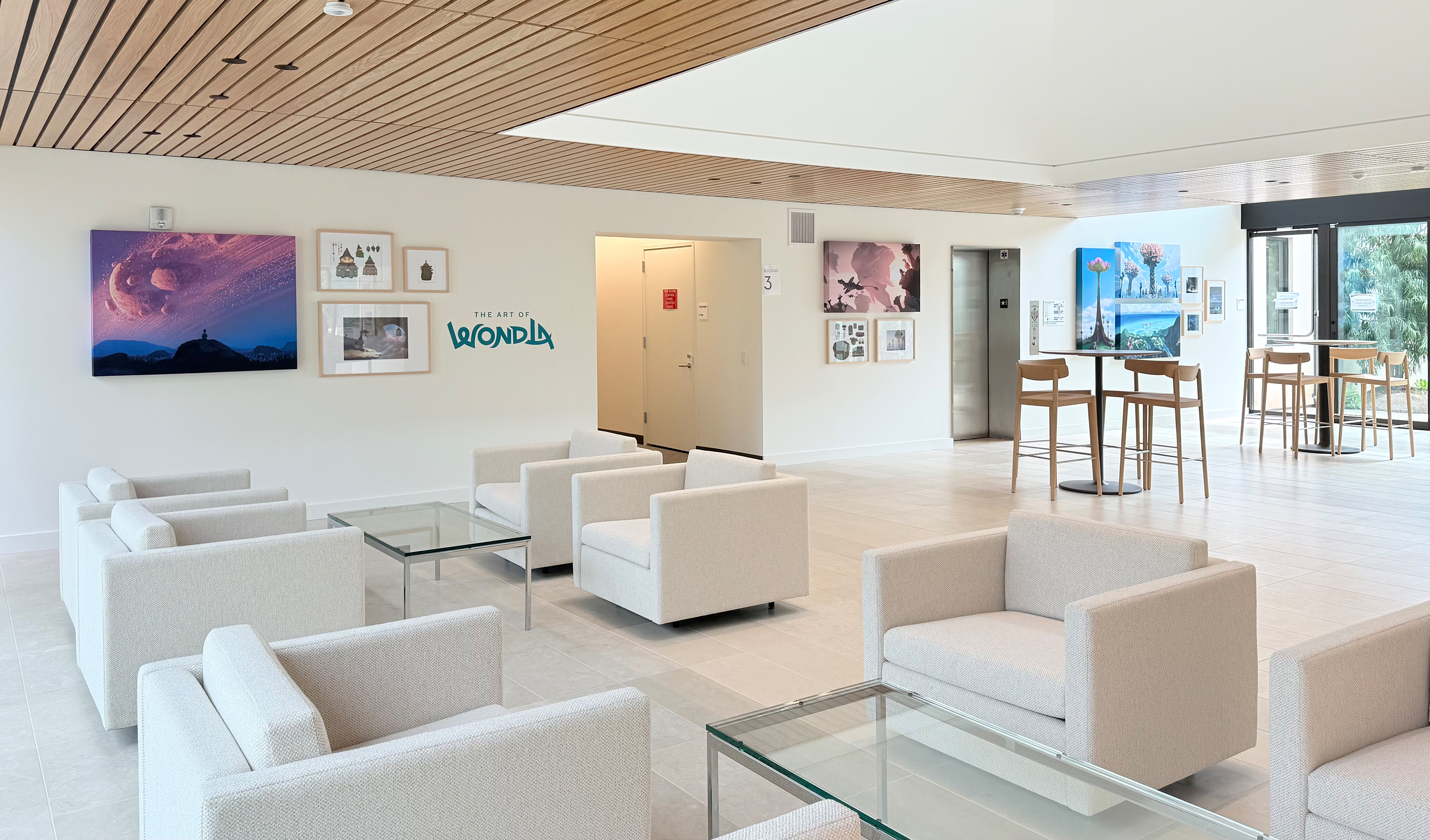
If your art rotates, the most useful shift is to treat the schedule as an annual calendar instead of a string of one-off projects. Pick your swap dates first, tied to natural moments like a new fiscal year, an annual meeting, a leadership change, or the start of a season. Then work backward: starting 8 to 12 weeks ahead is a reasonable baseline for a swap that includes printing or framing. Decide up front where retired pieces go, whether that means returning them, storing them, or redeploying them to another floor or office, so the plan doesn't stall the first time something comes down. If the full program is too much for one cycle, phase it. Start with the spaces people see first, such as reception, main gathering areas, and executive floors, and finish secondary areas in a later cycle.
A calendar also clarifies the budget. The price of the artwork is only one line. A realistic number also covers printing and framing, hanging hardware, shipping, installation and removal, handling for rotated pieces, and insurance. A simple way to organize it is to split the budget into a fixed portion for anchor pieces and permanent work, and a flexible portion for rotating work and prints. The flexible portion is where you adjust from year to year, and mapping swaps on a calendar lets you spread that cost across the twelve months. Pricing on imported materials has shifted several times this year, so ask for written quotes and note how long they're valid.
Prints and Rentals: Flexibility Without Compromise
Not every wall needs an original. Most strong programs mix originals with other formats. Limited-edition prints, archival photography, and custom printed collections deliver real visual impact at a lower cost per piece, and ones chosen from existing editions are often quicker to deliver.
Prints work well in corridors, huddle rooms, and breakrooms, where they add character without taking money from your anchor pieces. They also suit multi-office programs, since a printed collection can be repeated at every site, and areas you expect to update within a year or two, where swapping the walls is a small commitment.
The combination that tends to work best pairs an original or commissioned focal point with prints that extend its palette and story through the rest of the space. Prints chosen from existing editions can arrive within days. A bespoke large-format piece is a bigger project: it needs proofs, production, framing, and a slot on an installer's calendar, which together usually run six to twelve weeks. Rental and rotation programs help on the budget side too, lowering the upfront outlay and, depending on the arrangement, sometimes including installation and insurance.
The best office art looks effortless, but it never is. It's the result of a calendar someone started early, and the workplaces that feel intentional in the new year are usually the ones that made a few decisions in the last one.
TKOart specializes in corporate art consulting, collection curation, artist commissions, and installation management for companies making a serious investment in their workplace. Get in touch →

More Posts
Related Articles

Harnessing Color Psychology in Healthcare Art
Learn how strategic color choices can transform clinical spaces into havens of comfort and support.

Exploring the Benefits of Corporate Art Consulting
Using art to create a professional workplace and enhance office layout for a positive and inspiring environment.
The Intricate Allure of Texture in Abstract Art
The transformative power of texture in our online exhibition, featuring the abstract works of Father Bill Moore.
About Us
TKOart is a full-service art consultancy with over 30 years of experience, dedicated to bringing your fine art needs to life.