

Healthcare & Healing Environments
Evidence-Based Design: What the Research Says About Art in Patient Environments
Friday, August 7, 2026


.svg)
Healthcare environments carry a weight that no other interior space does. The people inside them are often frightened, in pain, or facing uncertainty that no amenity can resolve. For those designing and managing these spaces, the question is not simply how to make them look better. It is whether the physical environment can do meaningful clinical work: reducing anxiety, supporting recovery, and sustaining the staff who deliver care every day.
Evidence-based design is the discipline that takes that question seriously. Rooted in peer-reviewed research rather than aesthetic preference, it treats the built environment as a variable in patient outcomes and asks what the data actually shows. For healthcare administrators, facilities directors, and design teams working on clinical spaces, the body of research around visual art in patient environments is now substantial enough to inform procurement decisions, guide curatorial strategy, and justify investment at the institutional level.
Where the Research Begins
The foundational study in this field was published not in a design journal but in Science. In 1984, environmental psychologist Roger S. Ulrich conducted what would become one of the most cited studies in healthcare design history. Twenty-three surgical patients assigned to rooms with windows looking out on a natural scene had shorter postoperative hospital stays, received fewer negative evaluative comments in nurses' notes, and took fewer potent analgesics than matched patients in similar rooms with windows facing a brick wall.
The study has since accumulated over 5,000 citations and is widely regarded as the origin point of evidence-based healthcare design: the visual environment is not neutral, and what patients see during recovery is a clinical variable rather than a finishing detail. In the decades since, a substantial body of peer-reviewed research has built on Ulrich's foundation, expanding the scope from window views to artwork, from surgical recovery to broader patient populations, and from subjective well-being to measurable physiological markers.
What the Current Evidence Shows
A 2025 critical narrative review published through the University of Pennsylvania's Penn Center for Neuroaesthetics synthesized 25 experimental studies examining adult patients passively exposed to nature imagery and other visual art in healthcare settings. The efficacy of nature imagery is surprisingly robust given the limited evidence, consistently indicating reduced stress, pain, and anxiety and enhanced patient satisfaction.
A comprehensive scoping review published in PLOS One that same year, drawing on 25 peer-reviewed articles, found that 72% of studies reported outcomes related to an improved sense of wellbeing, 52% found that artwork improved healthcare experiences, and 52% reported that the art provided a positive distraction for patients.
These are not marginal findings. Across independent studies, using different patient populations, settings, and methodologies, the pattern holds: visual art in clinical environments produces meaningful, replicable benefits for the people inside them.
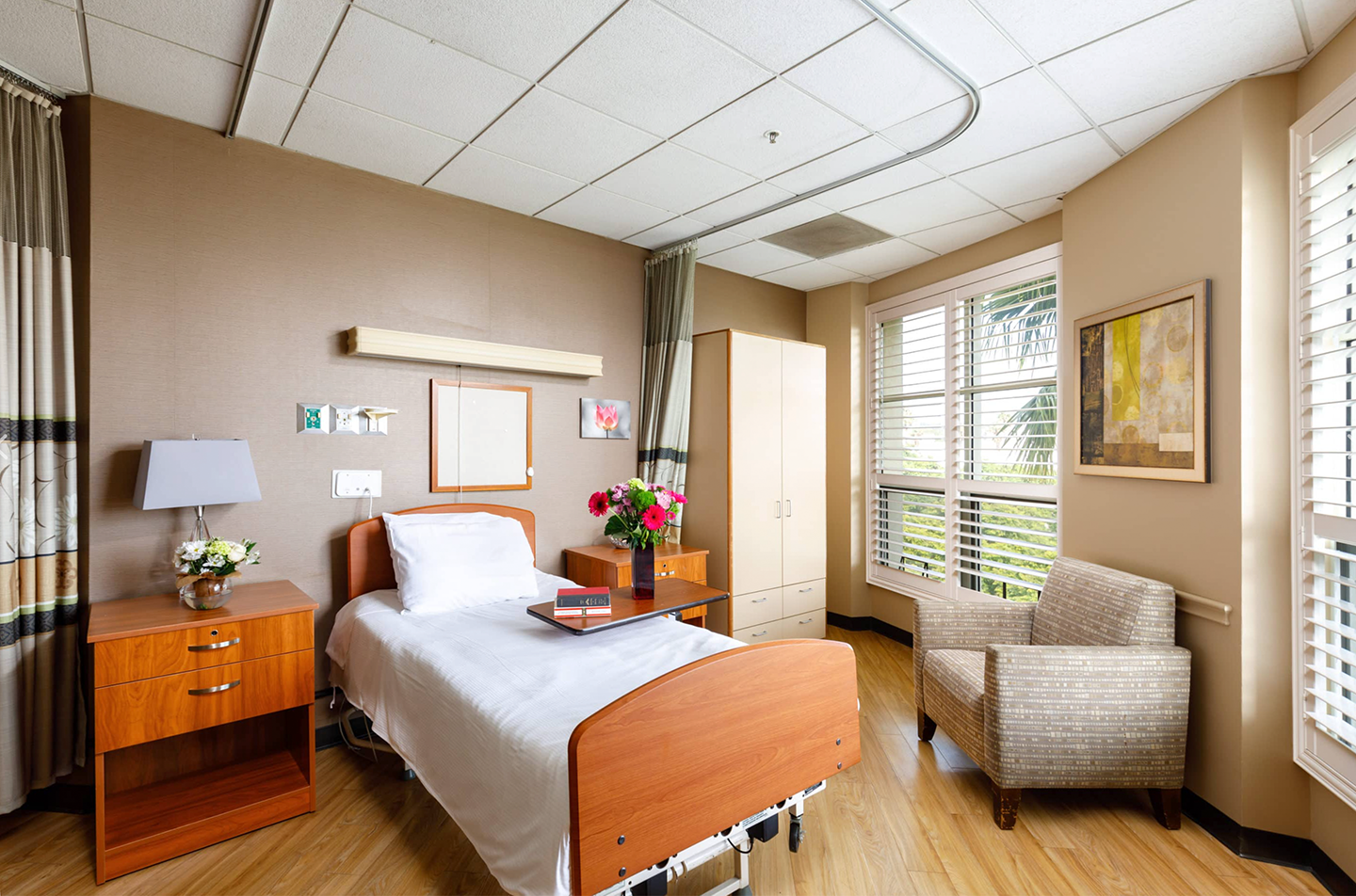
Beyond Subjective Wellbeing: The Physiological Evidence
One of the more significant developments in this area of research is the move beyond self-reported outcomes toward measurable biological markers. A scoping review published in PMC examined studies tracking physiological stress responses and found that viewing nature artworks resulted in lower self-reported stress compared with abstract artworks, and a forest mural produced larger blood pressure decreases than an aquatic mural, suggesting that specific content choices within nature imagery carry meaningfully different physiological outcomes.
This finding has direct implications for curatorial practice. It is not sufficient to introduce art into a clinical space and consider the intervention complete. The content of that art — its subject matter, composition, and palette — produces different physiological responses in patients. Nature imagery consistently outperforms abstract work across stress and anxiety measures. Soft, horizontal compositions and imagery with depth and openness perform differently than close, dense, or ambiguous visual content.
For healthcare art consultants and the institutions they serve, this means that selection criteria must be grounded in the evidence, not defaulted to personal taste or what happens to be available within a budget.
Patient Agency as a Design Variable
A randomized controlled trial conducted at Penn State University Cancer Institute, enrolling 186 inpatients with cancer diagnoses, added an important dimension to the research. Integrating arts programs into clinical settings is associated with less pain, stress, and anxiety, as well as improved mood, greater levels of interaction, and feeling less institutionalized. Critically, the study also found that patients who were given a choice in which artwork was displayed in their room demonstrated greater benefit than those assigned work without input.
This introduces patient agency as a meaningful variable in healthcare art programming. In an environment where patients often experience a significant loss of control over their circumstances, the ability to make even a small curatorial decision appears to have a measurable effect on outcomes. It is a finding with practical implications for how art programs are structured and delivered, particularly in longer-stay or oncology settings.
The Staff Dimension
The research on visual art in healthcare environments has focused predominantly on patients, but the staff dimension is increasingly represented in the literature and deserves equal attention from institutions managing workforce wellbeing and retention.
A systematic review published in Frontiers in Built Environment found that exposure of hospital staff to fractal visual patterns, seen in nature, architecture, or the visual arts, has beneficial physiological effects including stress reduction and cognitive benefits including improved problem-solving ability. Given the scale of burnout and attrition across healthcare workforces globally, the design of staff-accessible spaces including break rooms, corridors, and staff-only areas represents an underutilized lever for institutional wellbeing strategy.
The Penn Center for Neuroaesthetics review noted that, to its knowledge, no empirical studies directly measure the health and wellbeing benefits to staff or caregivers, and few consider their opinions — identifying how visual art impacts job productivity and satisfaction, stress and fatigue, and patient-caregiver interactions as a critical gap in the current literature. That gap is a call to action rather than a reason for caution: the physiological and cognitive benefits already documented for staff exposed to natural and fractal visual patterns give institutions a credible evidence base to act on now, even as more staff-specific research develops.
From Research to Curatorial Practice
The evidence establishes a clear foundation. Nature imagery reduces stress, anxiety, and pain perception. Patient agency in art selection amplifies those benefits. Content specificity matters: not all nature imagery performs equally, and the difference between a well-chosen work and a poorly chosen one is not simply aesthetic. Staff environments deserve the same evidential rigor as patient-facing spaces.
Translating that foundation into a functioning art program requires curatorial expertise that sits at the intersection of the research and the realities of a clinical environment. Subject matter guidelines, content review processes, placement strategy by space type, and procurement frameworks that account for evidence alongside budget are all components of a healthcare art program that does genuine clinical work rather than simply filling walls.
At TKO Art, our healthcare art consulting process is built on this evidence base. We work with healthcare institutions to develop art programs that are grounded in the research, sensitive to the populations they serve, and designed to contribute meaningfully to the patient and staff experience at every point in the built environment.
The research is clear. The environment is not a passive backdrop to care. It is part of it.
Interested in developing an evidence-based art program for your facility? Get in touch with the TKOart team.

More Posts
Related Articles

Harnessing Color Psychology in Healthcare Art
Learn how strategic color choices can transform clinical spaces into havens of comfort and support.

Exploring the Benefits of Corporate Art Consulting
Using art to create a professional workplace and enhance office layout for a positive and inspiring environment.
The Intricate Allure of Texture in Abstract Art
The transformative power of texture in our online exhibition, featuring the abstract works of Father Bill Moore.
About Us
TKOart is a full-service art consultancy with over 30 years of experience, dedicated to bringing your fine art needs to life.